
Flour Power
A trip round a flour mill and further lessons in sourdough.

This week I took myself off on a field trip to visit my local grower and miller, Angus from Mungoswells in East Lothian, Scotland. This also happens to be the countryside that I grew up in. Summers spent clambering over hay bales, running through stubble fields, shredding the delicate skin on my little legs, desperately escaping the monstrous combine harvesters as they bared down upon us, slowly working their way backwards and forwards methodically across the fields. There is a steady rhythm to life in the countryside, surrounded by farms, beats to the year, preparing the ground, sowing, harvesting and many in between. I have returned nearly thirty years later to these same fields.
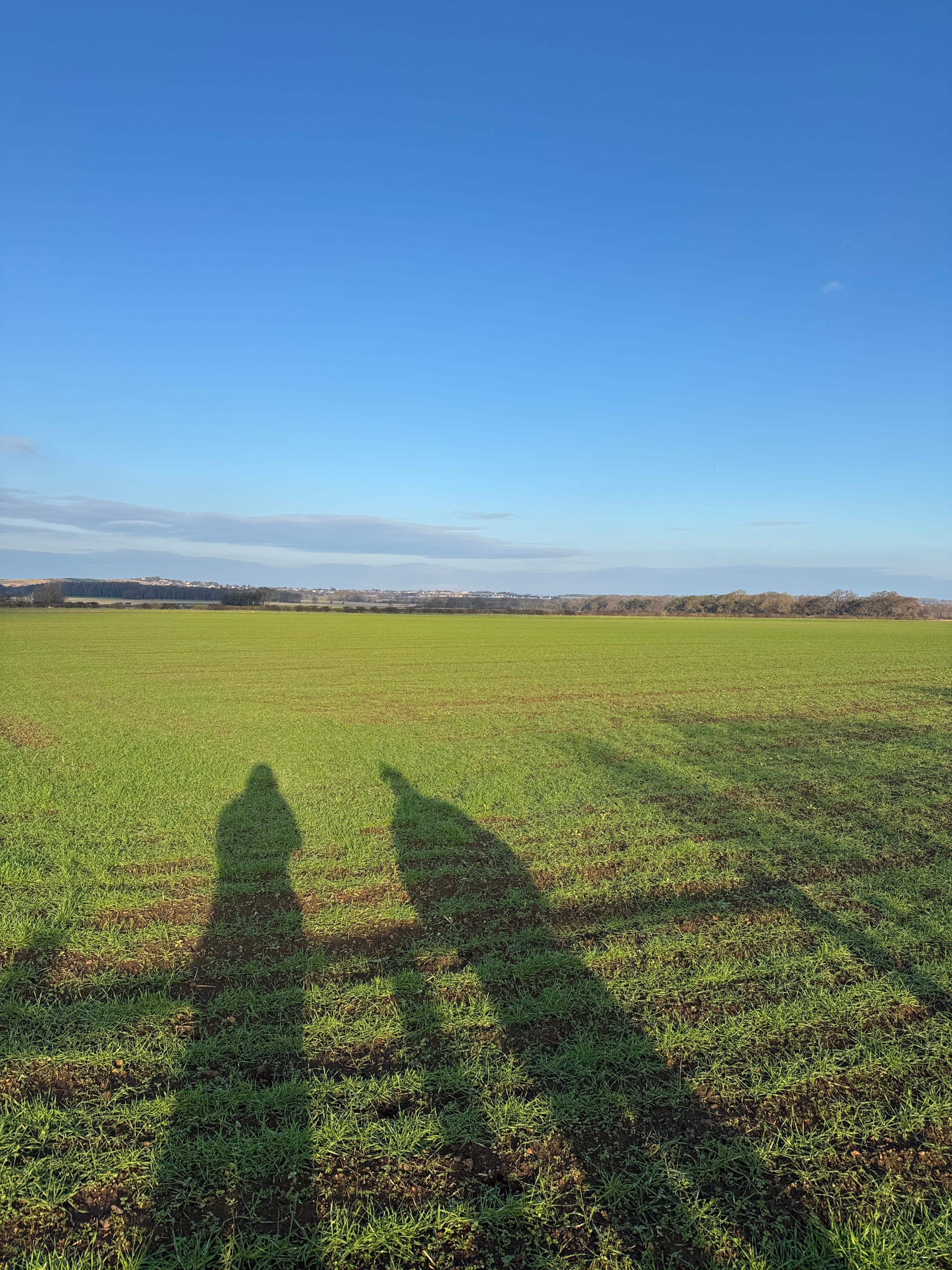
A field trip to Mungoswells.
I have worked with Angus or more specifically his flour for over ten years now, we were one of his first customers when he began milling flour. He previously grew and malted barley for the beer industry as well as dabbling in organic vegetables, until like most things in the farming world, margins got squeezed too tight and the big guys won out.
Angus’ farm is 550 acres, he rents another 50 acres nearby. Around 100 acres a year is rented to local farmers who grow potatoes, sprouts etc for crop rotation. This means each year something different is planted in the field to help the soil recover as well as allowing vital nutrients into the ground for soil health and the nutrition of the crop. Angus runs both an organic and non organic farm which is unusual, his original intention was to go all organic overtime, but the economy will not allow it. Pre-Covid a third of the wheat/flour he sold was organic, now it is down to a sixth. A fact of life is, in financial hardship consumers and businesses need to cut money from somewhere, food and ingredients as one of our larger expenditures is sadly where it often comes from. This is at the detriment to our health and our planet, we are pushed into spending what little money we have on food which is no longer food, produced by vast conglomerates not people. This year I want to focus on making food for people I know with ingredients from people I have a relationship with.
I spoke to Angus about what is needed to grow good wheat for flour, milling and specifically bread baking. The magic phrase that all bakers or people dabbling in bread know about is protein. It is a complicated term which encapsulates many things. It gives an indication of the strength of the wheat, how much air it can hold before collapsing, but also how much water. A benefit to very high protein wheat often grown in Canada or the Middle East is not purely its ease of use but its ability to stretch, capturing air and holding water, this means less flour is needed to produce a loaf of bread, therefore saving money. Angus says the two biggest factors in a successful wheat crop are nitrogen and sunshine. Living in Scotland we don’t necessarily have the most consist supply of sunshine, although the East Coast where Angus farms is better than most. So the next question is, how do you get nitrogen into the plant? There is a common practice to spray urea onto the crops, farmers are in fact encouraged to do this, Urea is 46% nitrogen so gives the wheat a final direct boost before harvest, increasing that all important protein count. In organic farming you obviously can’t spray anything onto the crops or land, you have to go back to old school methods. Angus explains that to fix nitrogen into the soil before planting for their organic fields they plant crops of clover. These need to be in the ground growing for around a year and a half to get sufficient nitrogen in the soil to produce wheat with enough strength to make bread flour. They then bring lambs into the field to naturally graze the clover down before they can harrow the fields, finally sowing the seeds. This helps explain why often making bread with organic flour is harder as a baker, the protein count isn’t as high because they are relying on natural methods to get nitrogen into the plant.


Angus runs a roller mill, his mill is a rescue from the Swiss army and this year it will be fifty years old. This is not a fancy mill, there has been plenty of tinkering along the way to get it working as they need. In the picture above Angus is holding one of the meshes that the flour is blown through as part of the milling process, the finest they used to be able to make them was a 0.6mm metal mesh so the flour was a lot coarser, when this mill was built that was the best available. They now have fine nylon meshes which go down to 125microns meaning the flour we get today is a lot softer and finer to the touch. Out of 1 ton of grain Angus will be able to mill 700kg of flour, whereas flour you would typically buy from a supermarket will yield around 850kg, meaning you are getting a product with more of the wheat sheath included. It also goes part of the way to explain how there can be such a variation of price within a bag of flour. The years of preparation which goes into the soil before the crop can even be sown, followed by the yield loss through the milling process, you start to understand how mills like Angus struggle to keep afloat.
In an ideal universe I would use an organic and stoneground flour but I weigh up whats available near me, the work and care that goes into growing the grain. I would rather buy roller milled flour from Angus than a stoneground flour from the supermarket.
One of my favourite stories from Angus is how he tests his grain from a new harvest. A lot of big commercial mills have all sorts of very expensive and complicated equipment to test the flour. Angus has two Panosonic bread makers, he weighs his ingredients into them and sets them off mixing, proving and baking. If the loaf comes out okay he knows the harvest is good. In the current world we live in of AI, computers and technology taking over, I am more grateful than I have ever been of Angus. His bread makers testing flour milled through his army surplus mill, I will very happily be baking bread with his flour.
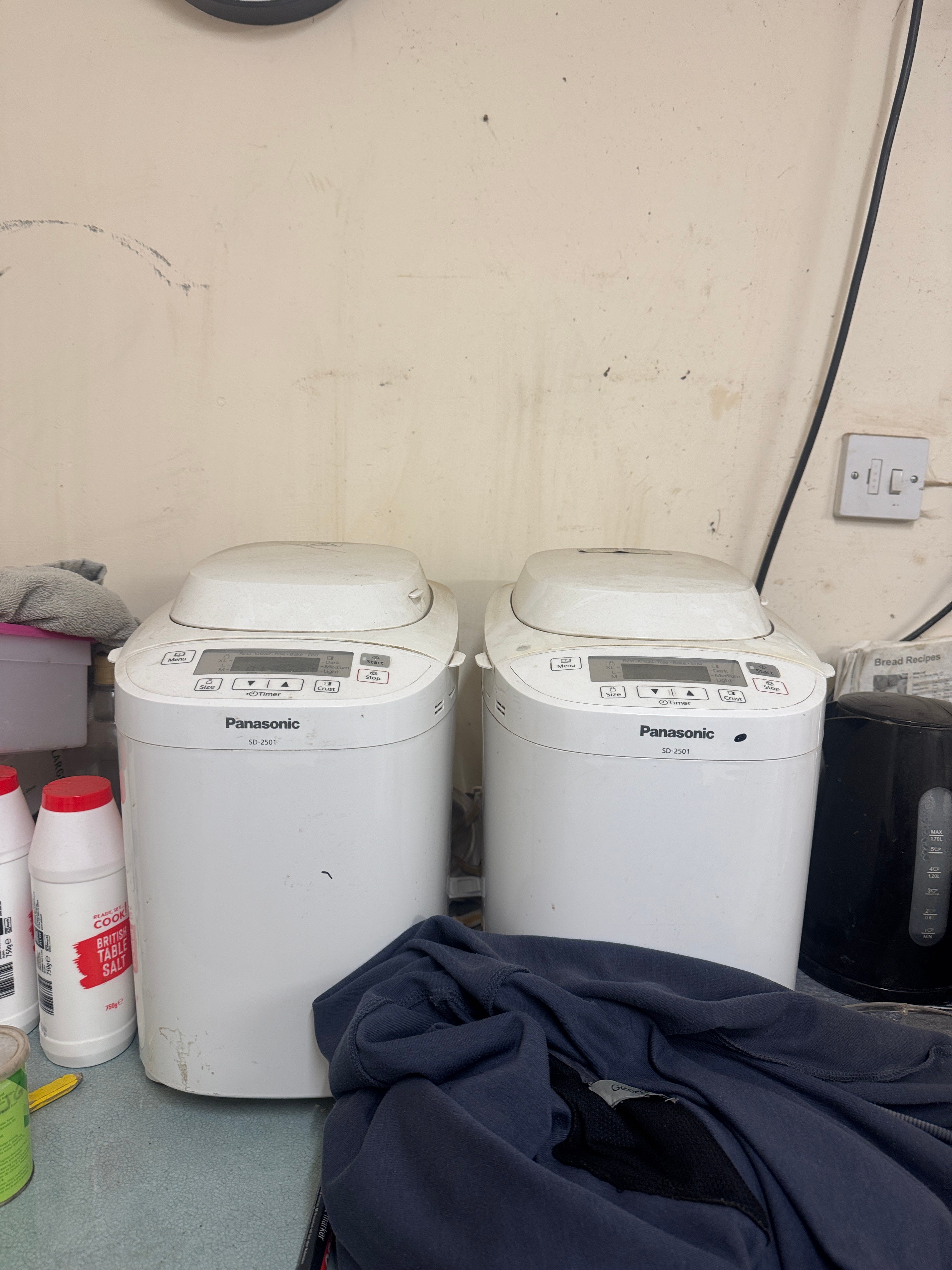
At home.
At home I am beginning from scratch, I am looking at all the little things, making small batches by hand and baking daily. I want to learn again, not just rely on the knowledge of the past. I am hoping to share this with you, it is not structured learning, I have never done that. I left school at thirteen due to ill health, this meant I have worked things out through sheer stubbornness and an inability to give up. I approach learning in perhaps an unusual way, I don’t have set rules and regulations, I would rather find out myself if something isn’t going to work as opposed to just accepting what I have been told. When I start with a new ingredient or recipe I like to set out a test with two opposites. This teaches me the most, in the shortest amount of time, I generally then work my way to somewhere in the middle. If I had just started at that middle ground I wouldn’t understand when something goes wrong, what it was or how to change it. I want to fundamentally understand how things work.
I am currently focusing on flour, mixing and fermentation. I’m keeping the base recipe the same, using the porridge bread recipe from a few weeks ago. It may seem boring to not be producing or making different recipes daily or weekly, but I want to get under its skin, understanding the nuances of how it works. That then allows me the knowledge to be more flexible in my scheduling, ingredients and ultimately make better bread.
If you are wanting to look for a way to add some new flours, perhaps stoneground or organic into your home baking I would suggest splitting it with a strong flour you are used. We do this in the bakery using Mungoswells as our backbone then adding in softer organic and stoneground flours for deeper flavour.
This weeks bread lesson, folds and fermentation times.


This bread I mixed yesterday morning before taking to Charlie to school, around 8am. I had mixed it so that it was warm, then put it into my office (the warmest room in the house, its small and tucked above the kitchen) to ferment. My plan was to try to make it within a 3-4 hour window with three folds building strength. My day then went in an unexpected direction and I ended up driving nearly two hours to go and see Angus at the mill. I sent Iain a message at home and asked him to move the bread somewhere cool. I didn’t get home until after 2pm by which point the dough was slack across the surface of the bowl and had more than doubled in volume. Having missed the folds, what the dough was lacking was an even structure and some strength. The purpose of the folds is to stretch and realign the gluten strands as well as trapping the air into the dough as you fold it. As the dough had just been left fermenting for six hours the structure was very loose and airy.
From these videos, you can see how soft and slack the dough is, also as I scoop my hand under, then also go to cut it with the dough knife you can see the large irregular webbing of the gluten alongside big air pockets.
If you look at the pictures above, you can see the dough starting to rip as it fully proved in the tin, this was the dough lacking strength which it normally would have built through the folds alongside its initial mix. The bread still bakes well, as I cut through the loaf you start to see the irregular crumb of the bread with large air pockets at the top, this is from over fermenting, as well as missing the folds, it is often referred to as flying crust.
This bread is still delicious and soft, I wanted to show you two things with this.
You don’t have to stick to strict schedules, you can literally mix it, forget about it and come back at the end of the day. Once that fear starts to leave you, making bread and sourdough will feel a lot less daunting.
This is a demonstration of what folds help you achieve, if you want to aim for that uniformed inside structure that you will find in an artisan bakery. This is one technique they implement to get it.
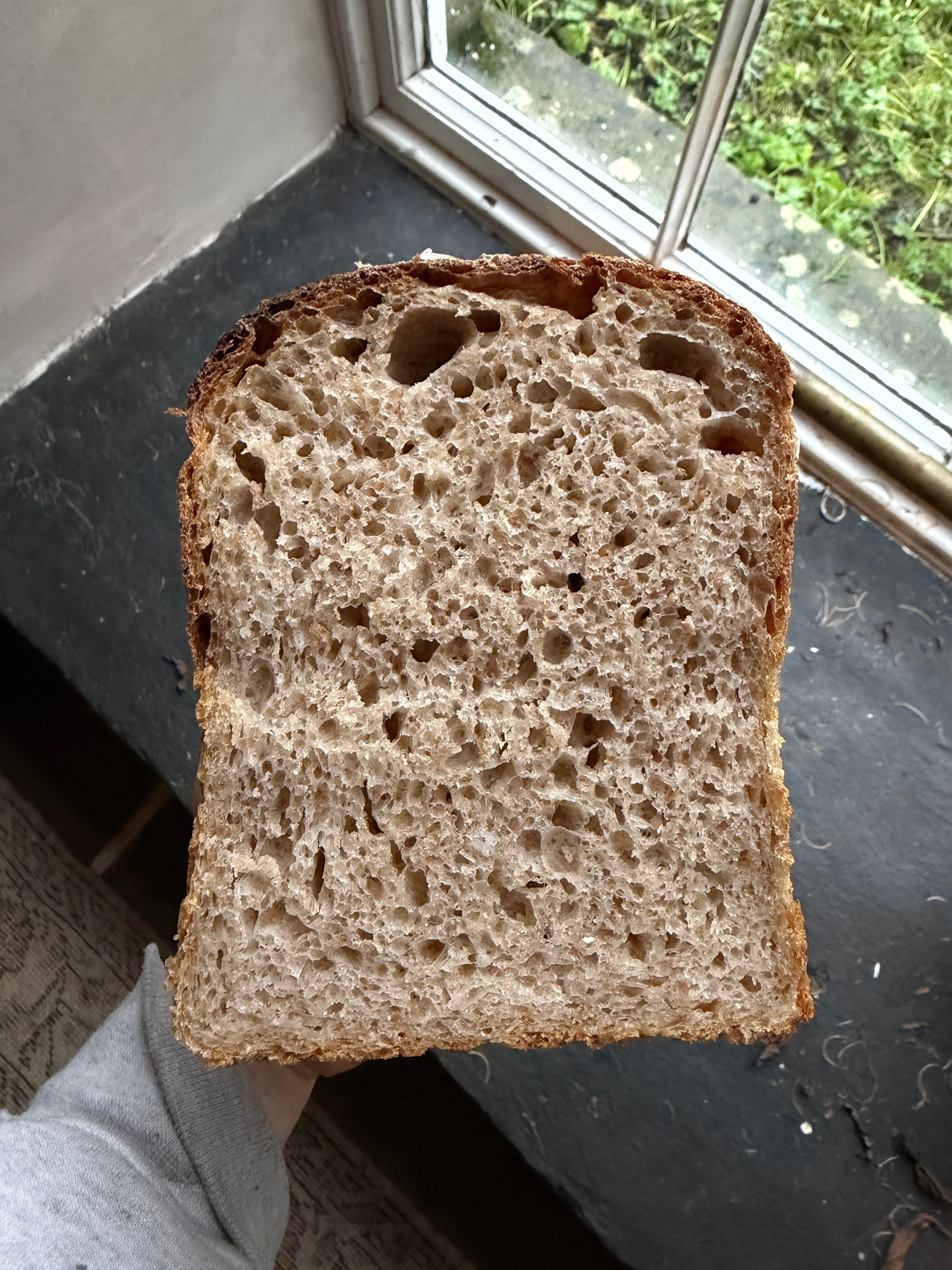
This is today’s bread made with organic flour from Angus’ farm fermented over 4 hours with three folds, you can see the texture of the crumb is far more even.
Thank you for reading my bread waffle. I hope that you find some of this useful and that it helps demystify the workings of bread and fermentation, showing that you can be a little more relaxed about it. Please like, share, comment or restack to help build this community.
Emily
The world needs more people like Angus. Supermarket own brand flour is often extremely cheap with no information, no product story. Angus & his testing makes me think of the organic baker I wrote about last year who mills his own flour, and the way organic flour and bread are tested. The grain varieties may be different to conventional crops and variables happen. Just as they do with home baking!
I love that you talk about the science behind this! I mill my own flour and know about what gluten does in bread but I’ve never heard what goes into the growing process. Thank you for sharing.